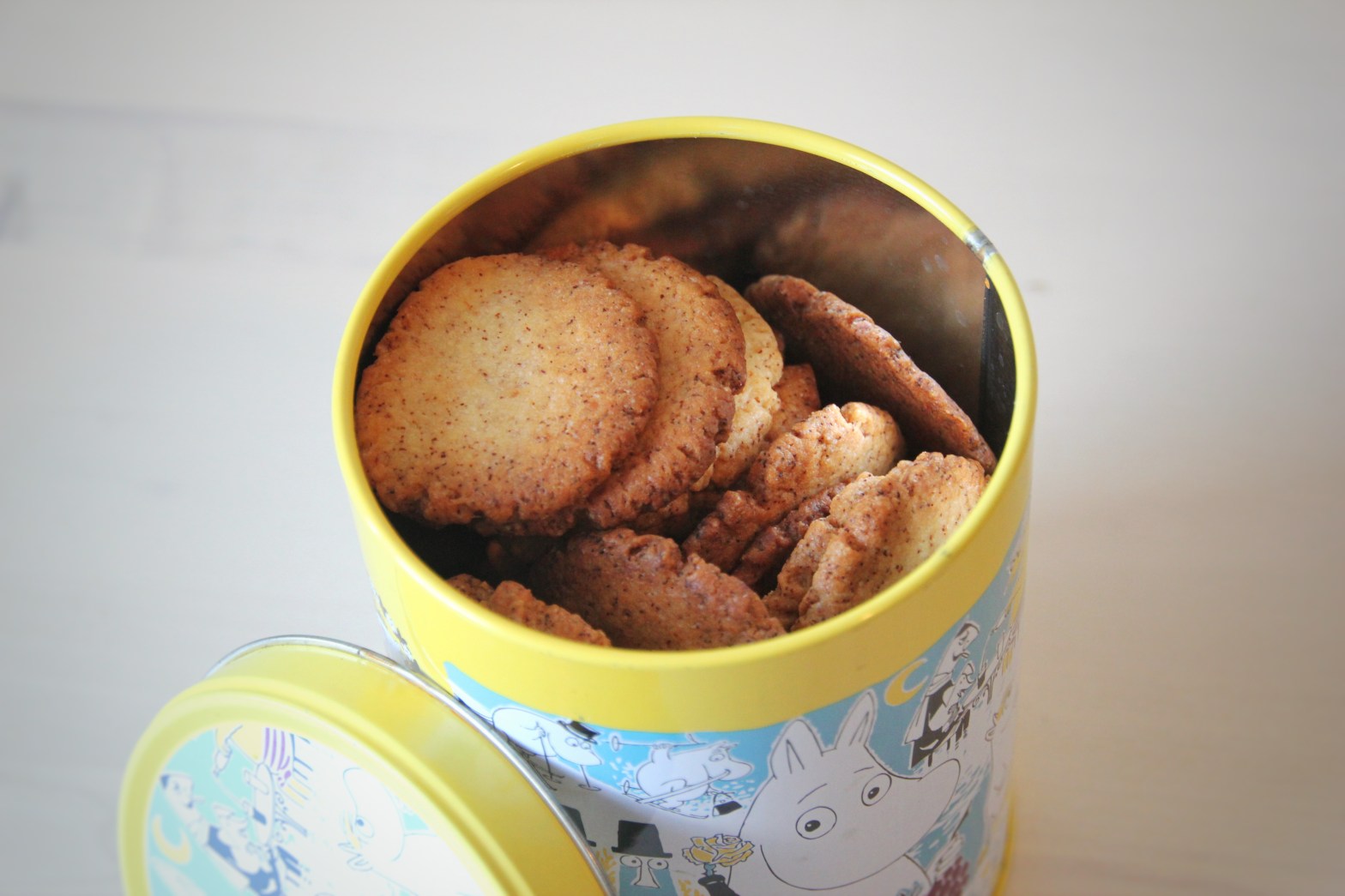
Suitable for: vegan, low phosphorus (34mg), low potassium (46mg), soy-free, medium sodium (127mg) – measured for 5 biscuits
~
My favourite French biscuits are definitely Sablés and Palets Bretons, but they are both traditionally absolutely not vegan and pretty salty, as well as quite hard to find in Finland! I’m always surprised that those are not well known outside of France, because they’re very basic and absolutely delicious!
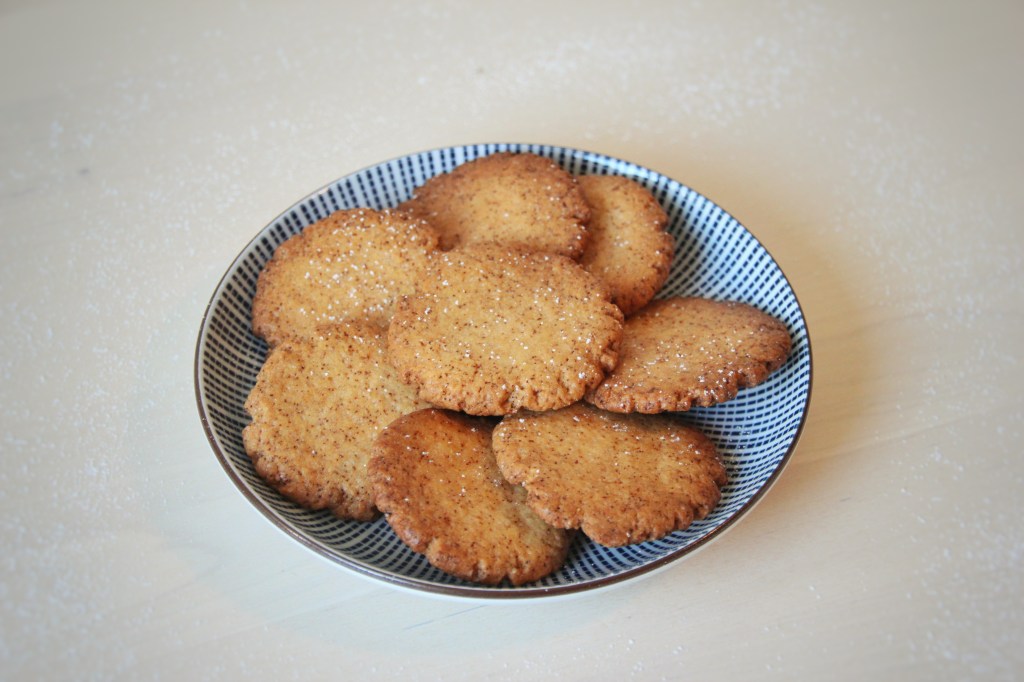
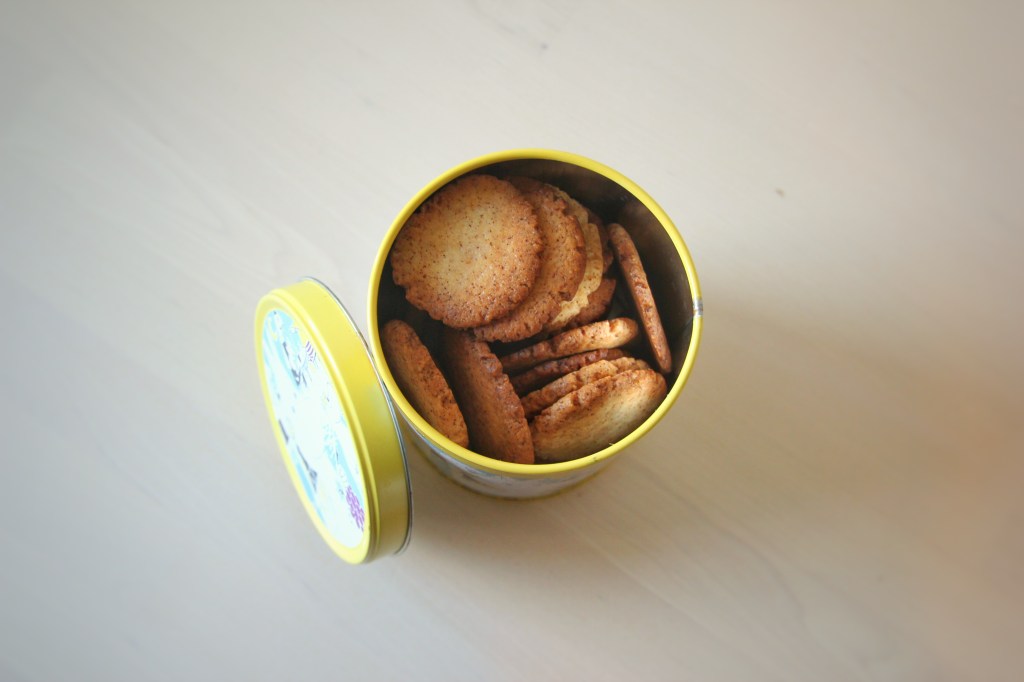
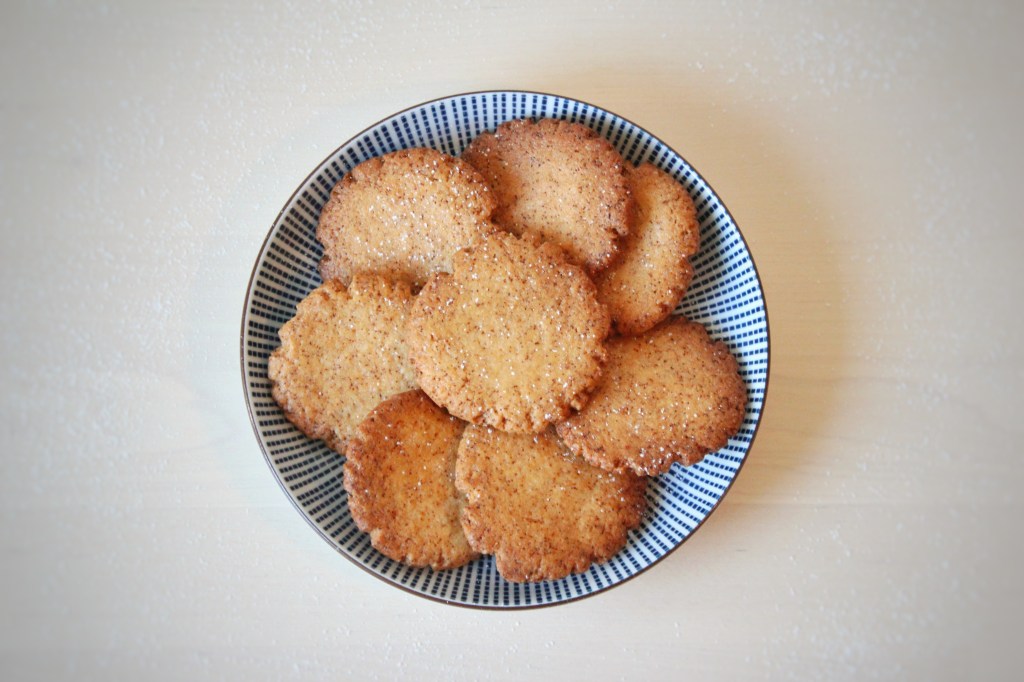
Sablés (meaning “sandy”) originate from the Western region of France named Loire Lands (Pays de la Loire, the Loire being the longest French river), an area most well known for its many Renaissance castles and rivers. The recipe was created in a town named Sablé-sur-Sarthe (Sarthe is another river, of course), hence the name – but also, the dough is quite sandy? Sablés are small, round and flat biscuits, sometimes compared to shortbread but crispier.
I was craving Sablés so hard the other day that I finally decided to try and make them myself, and found two French recipes to help me: this Vegan Sablé Cake by Déliacious, and those Quick Vegan Sablés by Sans foie ni l’oie.
Those recipes were already vegan but I adapted them slightly to lower their sodium! Unfortunately, I didn’t realize there was still a lot of salt in margarine. I’ll try to adapt this recipe using oil next time, but this was so good I still needed to share it!
Because the original recipes are in French (with measurements in grams), the cups and spoon equivalents are a bit strange, but I hope you can manage.
This was really quick and simple to make, and the results were delicious!
Recipe
Makes ~35 biscuits.
You can find the nutritional information for the ingredients at the bottom of the article.
Ingredients
- 120g (½ cup) margarine or vegan butter
- 120g (8 Tbsp) sugar
- 40g (40ml, or 2 + ½ Tbsp) oat cream (or other veggie cream)
- 210g (1 + 2⁄3 cup) baking flour (or all purpose)
- 7g (2 + ½ tsp) instant yeast
- 1 tsp vanilla extract
Instructions
- Heat up your oven to 180°C (350°F).
- Whisk together the room temperature margarine and the sugar until you get a creamy mixture.
- Add the oat cream and whisk until incorporated.
- Add the flour, the yeast and the vanilla extract, and mix with your hands or with a wooden spoon until you have a ball of dough (no need to knead it).
- With your hands, form small balls of dough and put them on a baking sheet. With a fork, flatten the balls so they are about ½ cm (¼ inch) thick*. Leave some space between the biscuits so they don’t get stuck together as they rise. Alternatively, you can flatten the whole dough at once and use a cookie cutter to get a more traditional shape.
- Put the cookies in the oven for about 15 minutes or until golden.
- Let the cookies cool down, and store in a metal box afterwards.
* If the dough is too sticky and hard to work with, there are several options. You can refrigerate it for a moment, about 30min. You can also add another piece of baking paper on top of the dough balls before flattening them with a fork or a rolling pin – it won’t have the cute fork pattern on top, but that’s not traditional anyway!
Nutritional informations
Total measurements (for 35 biscuits):
- 120g margarine by Keiju is ~0mg potassium, ~0mg phosphorus, ~840mg salt
- 120g sugar is ~2mg potassium, ~0mg phosphorus, ~0mg salt
- 40g oat cream by Oatly is ~0mg potassium, ~0mg phosphorus, ~44mg salt
- 210g baking flour is ~325mg potassium, ~243mg phosphorus, ~5mg salt
For a total of (for 35 biscuits): ~325mg potassium, ~243mg phosphorus, ~889mg salt, no soy, no animal products.
And for a serving (5 biscuits): ~46mg potassium, ~34mg phosphorus, ~127mg salt, no soy, no animal products.
 Shelf Life